Drive Thru System in Pakistan: Building Faster Lanes and Smarter Queues in 2026
A well-engineered Drive Thru System in Pakistan is where fast food, IP telephony, structured cabling, and customer-flow software all meet in a single lane. As quick-service restaurants, pharmacies, and banks race to serve people without asking them to leave their cars, the technology behind that lane has quietly become one of the most demanding communications projects a business can take on. Get it right and cars move through in seconds; get it wrong and a single dropped order backs up the whole street.
In this 2026 guide we break down what a drive thru system really involves, how it connects to the wider queue and network infrastructure, and why the same design thinking that powers a busy drive thru also powers a high-performing service branch in Riyadh.
What Goes Into a Modern Drive Thru System?
People often picture a drive thru as just a speaker and a window. In reality, a well-built Drive Thru System in pakistan is a tightly integrated stack of audio, ordering, and communications components that must work in harsh outdoor conditions, day and night, in heat and rain.
- Weatherproof order-point speakers and microphones tuned to cut engine and wind noise.
- Wireless or wired headset systems so order-takers hear clearly and reply hands-free.
- Digital menu boards that update prices and promotions instantly.
- Order-confirmation displays that reduce mistakes by showing the customer what was heard.
- Vehicle-detection loops and timers that measure how long each car takes at each stage.
- Structured cabling and PoE networking tying every device back to the kitchen and the back office.
The audio layer is the make-or-break element. If the order-taker cannot hear the customer over a rumbling engine, every other investment is wasted. That is why headset quality and speaker placement receive the most attention in the deployments handled by quality service providers who understand both the acoustics and the networking involved.
Why Timing Data Is the Secret Weapon
The single biggest advantage of a modern drive thru system is not the hardware you can see but the data it generates. By timing each vehicle from the menu board to the collection window, managers learn exactly where seconds leak away.
- Order time — how long the customer spends deciding and speaking.
- Total lane time — the full journey from entry to exit.
- Window time — how long payment and handover take.
- Queue depth — how many cars stack up during peaks.
With that data, a manager can staff a second order-point during rush hour, reposition the menu board, or retrain a slow shift. Small improvements compound quickly: shaving even ten seconds per car across a busy day can add up to dozens more served orders.
From Drive Thru Lanes to Branch Counters: The Same Flow Logic
The logic that speeds up a drive thru is the same logic that speeds up any high-traffic branch. Whether cars are lining up outside a restaurant in Lahore or customers are waiting inside a bank, the core problem is identical: route people to the right server, minimise idle time, and measure everything.
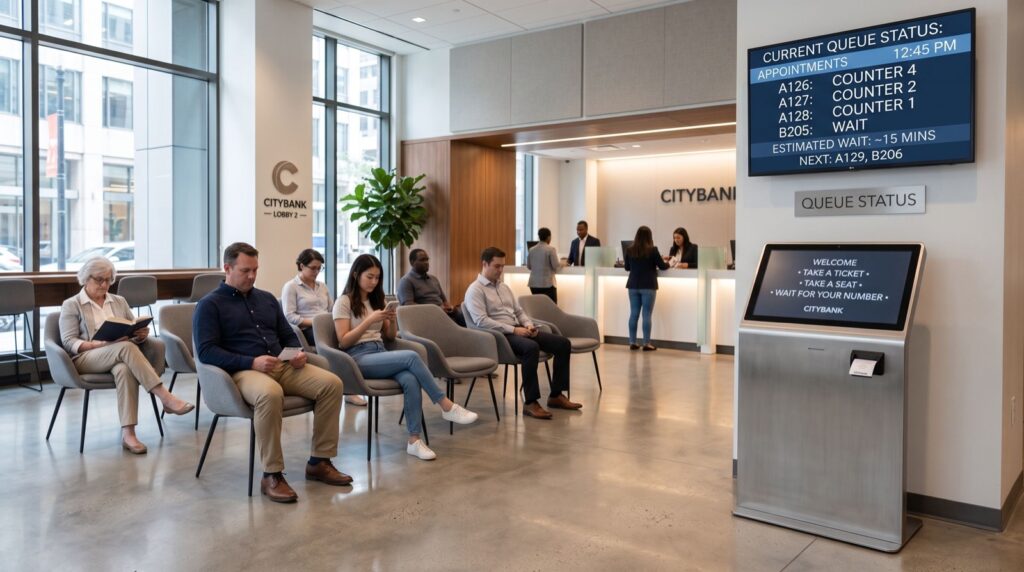
That is why operators running both restaurants and service branches often standardise on unified platforms. A queue management system in riyadh uses the same principles of ticketing, routing, and analytics that a drive thru uses for cars, simply applied to people on foot. Sharing hardware standards, cabling practices, and reporting dashboards across both keeps IT teams sane and support costs predictable.
Comparing Drive Thru and In-Branch Queuing
| Element | Drive Thru Lane | In-Branch Queue |
|---|---|---|
| Who is queued | Vehicles | People |
| Order/ticket entry | Speaker and menu board | Kiosk or mobile app |
| Audio priority | Very high (outdoor noise) | Moderate (indoor) |
| Timing metric | Lane time per car | Wait and service time |
| Bottleneck fix | Second order-point | Extra counter |
| Shared foundation | Network, cabling, analytics, and clear audio | |
Practical Tips for a Reliable Drive Thru Deployment
Based on real installations, these steps separate a smooth lane from a troublesome one:
- Survey the site for noise and signal. Test speaker clarity with a running engine before finalising placement.
- Run proper structured cabling. Weatherproof, correctly graded cable prevents the intermittent faults that plague cheap installs.
- Provision spare headsets. Batteries and ear cushions wear out; keep swaps ready so a dead headset never stops the lane.
- Integrate menu boards with your point of sale. Automatic price sync avoids costly manual errors.
- Review timing reports weekly. Trends reveal creeping slowdowns before customers start complaining.
Food-service safety and operations bodies, including guidance published by the U.S. Food and Drug Administration, stress that consistent process control and clear communication are central to reliable, safe service — principles a solid drive thru system enforces automatically through structured ordering and timing.
Frequently Asked Questions
How much can a drive thru system improve service speed?
Results vary by site, but operators commonly report meaningful reductions in average lane time after adding clear audio, order-confirmation screens, and timing analytics. The gains come from removing repeated orders and staffing peaks correctly, not from rushing staff.
Do drive thru systems work in noisy, hot outdoor conditions in Pakistan?
Yes, provided the hardware is weatherproof and the audio equipment is chosen for noise rejection. Site surveys and quality headsets are essential; cheap consumer gear tends to fail quickly outdoors.
Can a drive thru share infrastructure with an in-branch queue system?
Absolutely. Both rely on the same network, cabling, and analytics foundation. Operators running restaurants and service branches often standardise on shared platforms to simplify support and training.
What ongoing maintenance does a drive thru system need?
Plan for periodic headset battery and cushion replacement, speaker checks, cable inspections, and software updates. A maintenance agreement keeps the lane running and avoids surprise downtime during peak trade.
Conclusion: Engineer the Lane, Serve More Customers
A dependable Drive Thru System in Pakistan is far more than a speaker and a window; it is a communications project built on clear audio, solid cabling, and the same flow analytics that power a great service branch. Treat it as part of your wider queuing and network strategy, invest in the audio layer, and use the timing data to keep improving. Do that, and every lane you run in 2026 will serve more customers, more accurately, in less time.